
Juan Ramón Jiménez brings together patients with urostomy from the province for the first time
Topics Área Sanitaria Norte de Málaga
Hospital Universitario Juan Ramón Jiménez holds the first provincial meeting for people with urostomy and their families, a space to answer questions, share experiences and learn about the available healthcare resources.
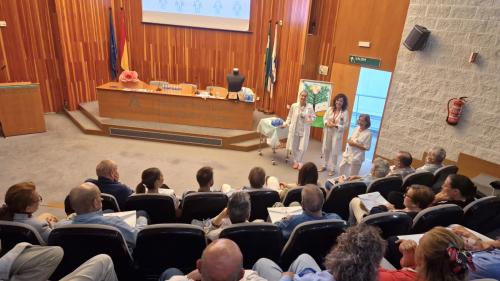
Hospital Universitario Juan Ramón Jiménez, a centre of the Servicio Andaluz de Salud (SAS), is organising the first provincial meeting aimed at people with urostomy and their families. The event aims to help those living with a urostomy to answer questions about their daily care, share experiences and learn about the healthcare resources available to them.
What a urostomy is
A person with a urostomy is someone who has undergone surgery so that urine exits the body through an opening in the abdomen called a stoma. It may be necessary after surgery for bladder cancer or other diseases of the urinary system. Unlike other ostomies, a urostomy allows urine to exit through a collection bag attached to the skin, which requires specific care and monitoring.
Physical and emotional changes
According to the hospital, living with a urostomy is not limited to learning a care technique. It means facing physical, emotional and social changes that can affect self-esteem, intimacy and personal relationships. After the operation it is common to have fears, insecurities or doubts about family, work and leisure life. That is why the centre treats the person as a whole, with clear information, ongoing emotional support and contact with other patients to reduce isolation.
Follow-up from before surgery
The initiative comes from the Urology nursing team and the advanced practice nurse (APN) in Ostomy, from General Surgery. Support begins before the operation, with stoma marking, continues in the inpatient unit and is maintained afterwards in the ostomy clinic. There, individualised health education, advice on collection devices, prevention of complications and monitoring of the peristomal skin are offered. Before discharge, recommendations for care at home are reinforced and continuity is guaranteed with periodic check-ups.
Specialists from Urology, Nursing, the stoma care nurse, Primary Care professionals and, when needed, Psychology and Social Work take part in the care. The hospital maintains that, with appropriate training, suitable devices and the necessary follow-up, people with urostomy can incorporate these cares into their routine and regain their independence.