
The C3A in Córdoba opens an exhibition on folklore and contemporary art until March 2027
Topics C3A Patronato de la Alhambra y Generalife
The Centro de Creación Contemporánea de Andalucía (C3A) presents 'La picadura de la tarántula: sur y folclore', a show that can be visited in room T4 until March 28, 2027, and that brings together original materials by anthropologist Ernesto de Martino alongside works by current Andalusian artists.
AndalucíaYa newsroom ·
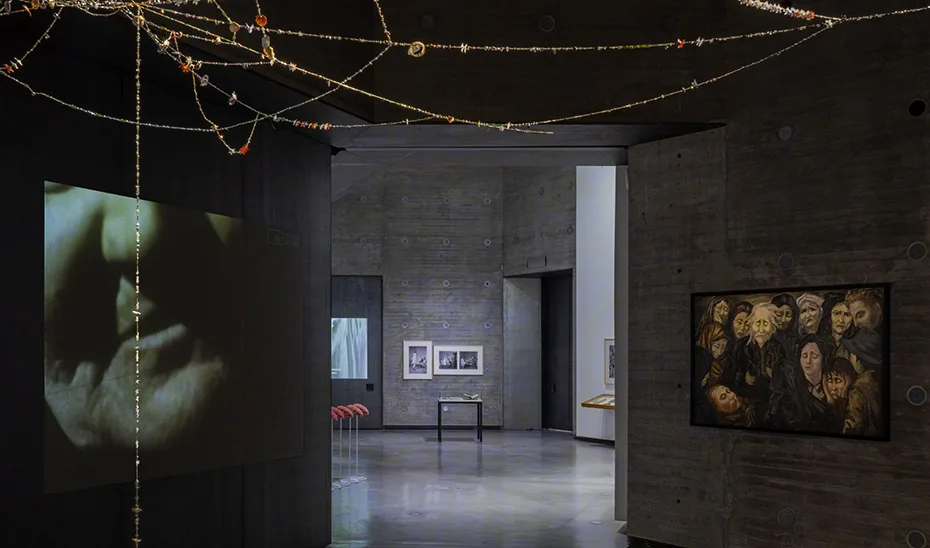
The Centro de Creación Contemporánea de Andalucía (C3A) in Córdoba now hosts the exhibition 'La picadura de la tarántula: sur y folclore', which can be visited in room T4 until March 28, 2027. The show is curated by Lluís Alexandre Casanovas Blanco.
What can be seen
The exhibition explores the relevance of the thought of Italian anthropologist Ernesto de Martino (1908-1965) and its relationship with contemporary artistic practice produced from the south. It brings together original materials from his research, in dialogue with recent works and new productions by young Andalusian artists.
The starting point is De Martino's research in southern Italy during the 1950s, which took as a reference the writings of philosopher Antonio Gramsci and the works of poet and painter Carlo Levi, exiled to Lucania in 1935. The show focuses on his study of tarantism, a supposed condition popularly attributed to the tarantula bite that plunged those who suffered it into states of convulsion or trance and whose cure was linked to rituals of music and dance.
Materials and artists
Alongside the materials from De Martino's expeditions, films, photographs, documents and contemporary works are exhibited. Among the audiovisuals are works by filmmakers such as Lino Del Fra, Giuseppe Ferrara, Cecilia Mangini and Gianfranco Mingozzi. Also included are perspectives of Andalusian filmmakers from the late seventies and early eighties on pilgrimages and religious rituals, such as 'Rocío' (1980), by Fernando Ruiz Vergara, and 'Tierras de Málaga' (1979), by the Cooperativa de Cine de Málaga.
As for the new productions, works by María Alcaide (Huelva, 1992), María Rosa Aránega (Almería, 1995), Mateo Chica (Madrid, 1998) and Manuel Zapata Vázquez (Sevilla, 1991) stand out, the latter two with commissions specifically for the show. The exhibition also includes pieces from the Universidad Popular del Mediodía, a project of La Madraza - Centro de Cultura Contemporánea de la Universidad de Granada based in the Casa de Porras, in the Albaicín.
Visit
The show can be seen in room T4 of the C3A in Córdoba until March 28, 2027. The centre depends on the Consejería de Cultura, Patrimonio Histórico y Deporte de la Junta de Andalucía.
Breaking news from News, on your phone
An alert only when something can't wait. Free, no account needed.
On iPhone, alerts only arrive if you first add AndalucíaYa to your Home Screen. How to do it, step by step
This browser can't receive alerts. Try another one, such as Chrome or Safari.
You've blocked alerts from AndalucíaYa in this browser. You can turn them back on in its settings. How to do it, step by step
Only what can't wait. Change or remove it in my alerts
Shall we let you know what matters?
Phone alerts
On iPhone, alerts only arrive if you first add AndalucíaYa to your Home Screen. How to do it, step by step
This browser can't receive alerts. Try another one, such as Chrome or Safari.
You've blocked alerts from AndalucíaYa in this browser. You can turn them back on in its settings. How to do it, step by step