
El Virgen del Rocío opens a study on the CHD8 gene and autism
Topics Hospital Universitario Virgen del Rocío
The Seville hospital brings together families from all over Spain to investigate why the same genetic alteration produces very different clinical pictures.
AndalucíaYa newsroom ·
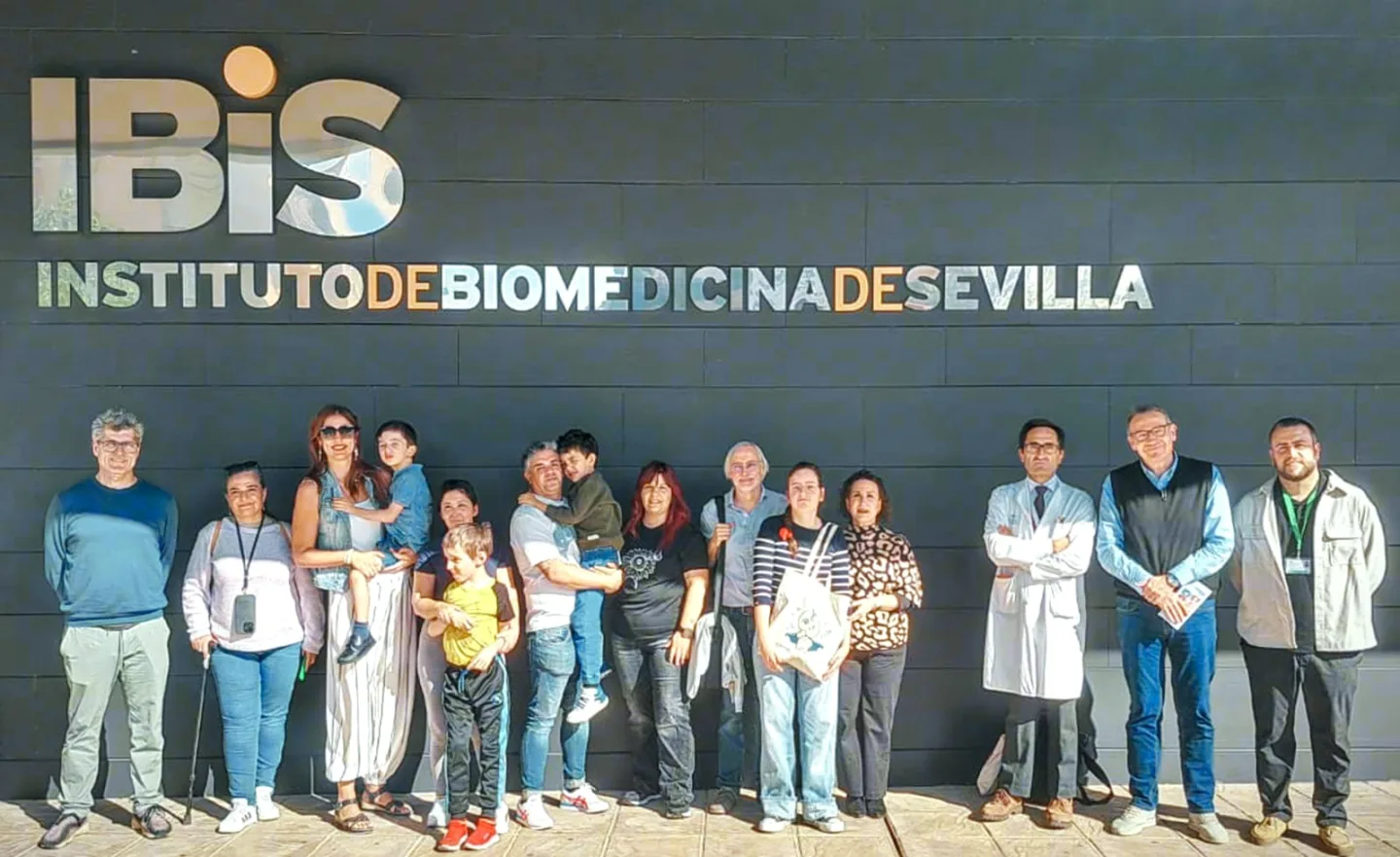
Children with the same alteration in the CHD8 gene can present very different clinical manifestations. Understanding why is the goal of the study that the Hospital Universitario Virgen del Rocío is going to launch, which will host families from all over Spain to participate in the research, according to what the Servicio Andaluz de Salud (SAS) has communicated.
The work focuses on the CHD8 gene, one of the genetic alterations most closely linked to autism spectrum disorder (ASD). In affected people, this gene produces a protein that regulates the expression of other genes essential during embryonic and neuronal development. The disorder is usually due to a mutation in one of the two copies of the gene, generally of spontaneous appearance.
The syndrome is characterized by an ASD picture, mild to moderate intellectual disability, macrocephaly (increased head circumference) and tall stature. Gastrointestinal disorders, muscle hypotonia, sleep alterations and characteristic facial features such as a broad forehead or widely spaced eyes are also common.
What will be studied in the families
Participants will have their cognitive, motor, behavioral and psychiatric characteristics studied, as well as family and social aspects. The aim is to better understand this rare disease linked to autism.
In addition to expanding scientific knowledge about this rare genetic condition, the project will serve to create a national database on CHD8 that facilitates future research and fosters collaboration among researchers, health professionals and family associations.
The study is carried out by the Unidad de Salud Mental Infanto-Juvenil del Hospital Universitario Virgen del Rocío (HUVR), the Instituto de Biomedicina de Sevilla (IBiS), the Centro Andaluz de Biología Molecular y Medicina Regenerativa (CABIMER) and the Asociación Emuná CHD8. It is led by José Carlos Reyes Rosa (CABIMER) and Nathalia Garrido Torres, Miguel Ruiz Veguilla and Benedicto Crespo-Facorro (HUVR-IBiS).
Breaking news from News, on your phone
An alert only when something can't wait. Free, no account needed.
On iPhone, alerts only arrive if you first add AndalucíaYa to your Home Screen. How to do it, step by step
This browser can't receive alerts. Try another one, such as Chrome or Safari.
You've blocked alerts from AndalucíaYa in this browser. You can turn them back on in its settings. How to do it, step by step
Only what can't wait. Change or remove it in my alerts
Shall we let you know what matters?
Phone alerts
On iPhone, alerts only arrive if you first add AndalucíaYa to your Home Screen. How to do it, step by step
This browser can't receive alerts. Try another one, such as Chrome or Safari.
You've blocked alerts from AndalucíaYa in this browser. You can turn them back on in its settings. How to do it, step by step