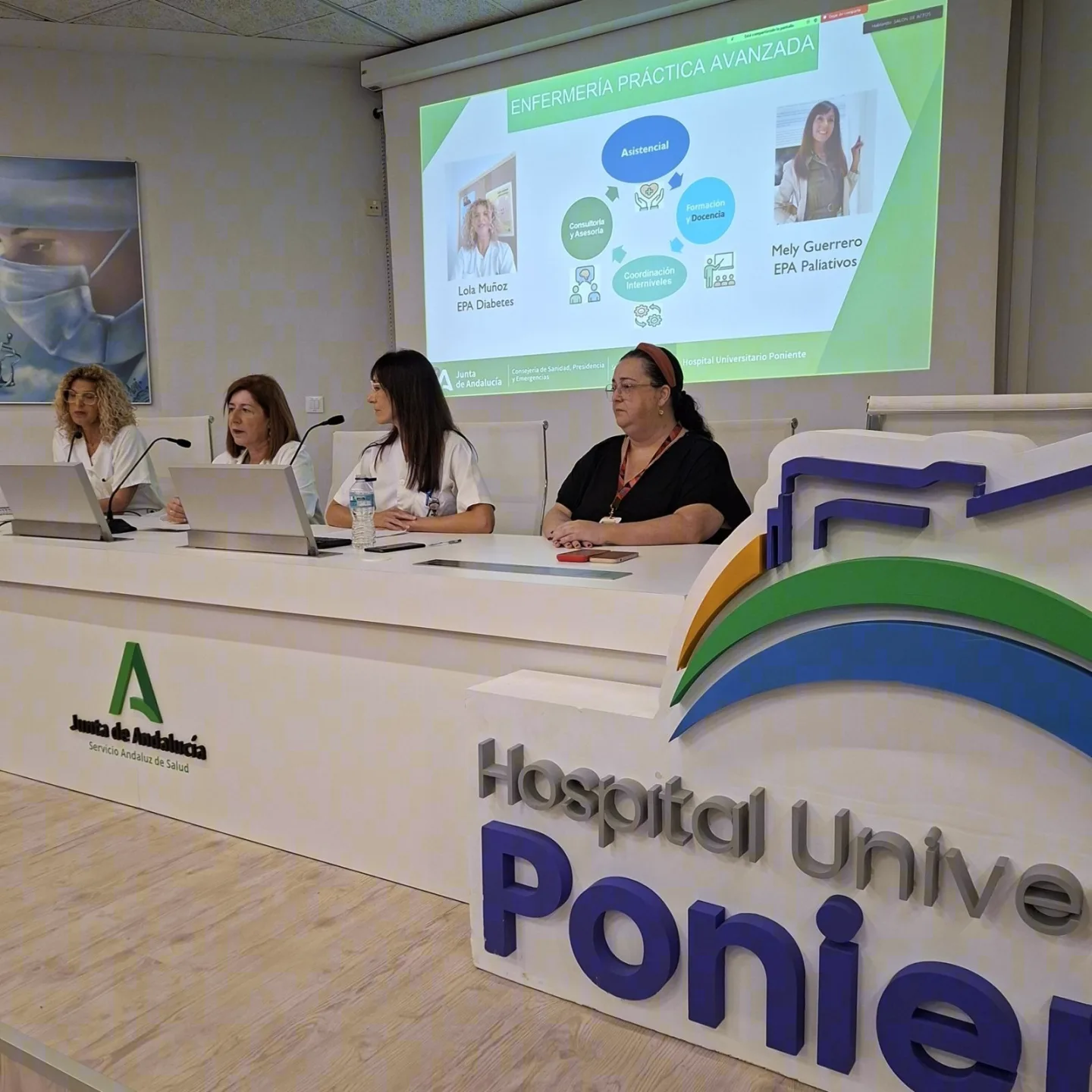
Hospital Universitario Poniente adds two advanced practice nurses for patients with complex diabetes and palliative care.
AndalucíaYa newsroom
·
Photo: Servicio Andaluz de Salud
Two patients with diabetes who need a specialised therapeutic approach and people in the advanced or terminal phase of an illness now have a reference professional at the Hospital Universitario Poniente. The centre has added Advanced Practice Nursing (EPA) in Diabetes and in Palliative Care to its portfolio of services, with two nurses dedicated to those who present complex needs.
María Dolores Muñoz serves as the EPA reference in Diabetes and María del Carmen Guerrero in Palliative Care, as reported by the Servicio Andaluz de Salud (SAS).
Diabetes monitoring and new technologies
The figure of the EPA in Diabetes and Complex Treatments was created to respond to patients who require a specialised therapeutic approach, especially given the incorporation of advanced technologies and new treatment options. Its implementation responds to growing therapeutic complexity, the digital divide and the need to guarantee continuous and safe support for people with diabetes.
This professional will reinforce clinical monitoring and therapeutic education for the patient and their family, promote the appropriate use of new technologies and improve coordination between the different professionals and services involved. She will also help reduce the fragmentation of care pathways and give greater safety to patients through shared protocols. She will work in coordination with Primary Care and with units of the hospital itself such as Internal Medicine, Paediatrics or Gynaecology and Obstetrics.
Support in the final phase of life
The EPA in Palliative Care aims to provide personalised, specialised and quality nursing care to patients in the advanced or terminal phase with complex palliative needs, as well as to their families and caregivers. It is aimed at both oncological and non-oncological patients and includes emotional support for relatives and caregivers, the facilitation of preferential care pathways and advice to healthcare professionals.
Among its functions are the clinical monitoring of people included in the Integrated Care Process for Palliative Care, the reception and management of referrals, the handling of complex and urgent telephone consultations, and the coordination of safe transitions home after hospital discharge. It also takes part in organising admissions from home or from other centres and carries out training activities for care teams.
Referral to this resource is established according to clinical complexity criteria, such as marked functional deterioration, the presence of organ failure in a terminal situation, poor symptom control, the need for palliative sedation or situations of family exhaustion that require structured support.
Among the expected benefits of this model are the early detection of patients with palliative needs, the reduction of avoidable hospital admissions, better management of complex hospital discharges and support for the professionals who care for these patients. It also seeks to help people face the final stage of their life in the place of their choosing, in accordance with their preferences and needs.
The centre's Director of Nursing, Consuelo Artero, points out that the EPA «acts as a fundamental link between the different care levels» and that this ensures a fluid continuity of care and reduces avoidable readmissions.
Share this story
Breaking news from News, on your phone
An alert only when something can't wait. Free, no account needed.
On iPhone, alerts only arrive if you first add AndalucíaYa to your Home Screen.
How to do it, step by step
This browser can't receive alerts. Try another one, such as Chrome or Safari.
You've blocked alerts from AndalucíaYa in this browser. You can turn them back on in its settings.
How to do it, step by step