29-N general election in Andalucía How to vote, the calendar and every result since 1977

An app from Virgen del Rocío measures the exercise that strengthens bone

Topics Hospital Universitario Virgen del Rocío Universidad de Sevilla

The Seville hospital and the University of Seville develop Weapom, a tool that records the impacts of exercise to prevent fragility fractures.

AndalucíaYa newsroom ·
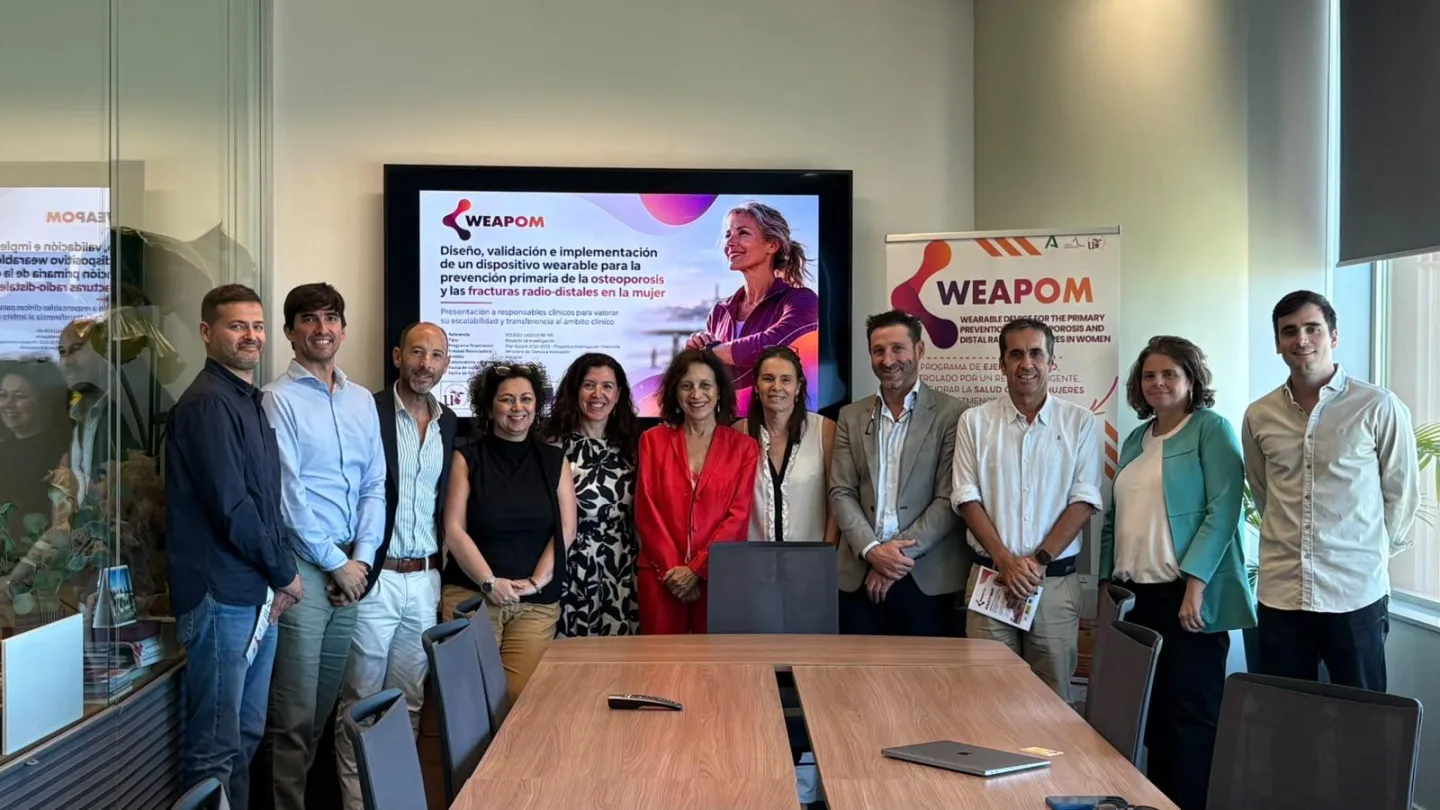
Diez personas de pie tras una mesa de reuniones, junto a una pantalla y un cartel con el texto WEAPOM sobre osteoporosis.
Photo: Servicio Andaluz de Salud
Walking faster or taking more steps is not enough to care for bone. What seems to make the difference is how much mechanical load it receives and, above all, how many weeks it is maintained. This is indicated by the first results of the Weapom project, an application developed by the Hospital Universitario Virgen del Rocío (HUVR) and the Universidad de Sevilla (US) that records the impacts the bone receives during physical activity. The tool is installed in a wearable device that continuously measures daily steps, walking intensity, jumps and accumulated mechanical impacts. With this data it is possible to know not only how much a woman moves, but what type of stimulus her bone system receives, how often and for how long. The goal is for this information to serve to adapt the exercise prescription to each woman and to detect earlier those at higher risk, so that action is taken before the first fracture appears. According to preliminary results, the total number of steps or the general increase in activity do not by themselves explain the bone response; accumulated mechanical load and its repetition over the weeks do. In walking, the analyses suggest that walking at higher cadences could generate a more favorable signal in the femoral neck than walking at moderate paces, although this point needs confirmation in later studies.

Why the dose of exercise matters

Osteoporosis affects more than 2.8 million women in Spain, especially after menopause, and causes more than 330,000 fragility fractures each year. These figures are expected to increase by 28.8% by 2030. The disease can go unnoticed for years and, often, the first sign appears when a fracture has already occurred. The study is led by doctors Sergio Tejero, traumatologist at the HUVR and professor in the Department of Surgery at the US, and Borja Sañudo, professor at the Universidad de Sevilla. The team includes doctors María Ángeles Martínez Maestre and Raquel Domingo, from the Service of Gynecology and Obstetrics; doctors José Ángel Noval, Yovanna Castro and Susana Valverde, from the Service of Laboratories, and Miguel Ángel Giráldez, head of the Traumatology Unit. The cost of the project is included within the framework of the State Plan for Scientific, Technical and Innovation Research, as reported by the Servicio Andaluz de Salud (SAS).

Shall we let you know what matters?

Phone alerts

Change or remove it in my alerts

What it's about Health Education