29-N general election in Andalucía How to vote, the calendar and every result since 1977

A bone found in Lebrija reveals Andalusia's oldest mule, from 2,500 years ago

Topics Instituto Andaluz del Patrimonio Histórico

A team from the IAPH and the Universidad Pablo de Olavide identified an Iron Age phalanx using protein techniques. It is the oldest evidence of mule breeding in the southern Iberian Peninsula.

AndalucíaYa newsroom ·
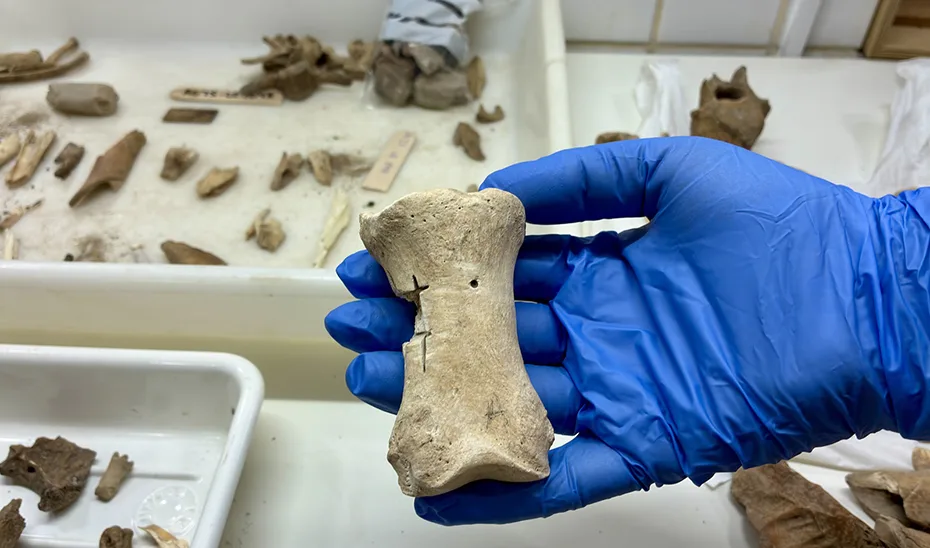
Una mano con guante azul sostiene un hueso fósil sobre bandejas con restos óseos y etiquetas en un laboratorio.
Photo: Junta de Andalucía · Portavoz
A small equine phalanx found at the site on calle Alcazaba in Lebrija (Sevilla), from the Iron Age, belongs to the oldest mule identified in Andalucía. It is about 2,500 years old. The study was led by Eloísa Bernáldez Sánchez, head of the Paleobiology Laboratory of the Instituto Andaluz del Patrimonio Histórico (IAPH), and Bruno Martínez Haya, professor of Physical Chemistry at the Universidad Pablo de Olavide and director of the Centro de Nanociencia y Tecnologías Sostenibles. It has been published in the journal «Journal of Archaeological Science».

How it was found out

Telling a horse, a donkey or a mule apart by their bones is very difficult, especially with excavation fragments. The team turned to proteomics, the analysis of proteins, to identify possible hybrids. The Lebrija bone, dated by radiocarbon, is the oldest evidence of mule production in the south of the Iberian Peninsula confirmed with biomolecular techniques. The research has reviewed equids from nine sites in the south of the peninsula, between about 2,800 and 1,400 years old, from the Iron Age to Late Antiquity. It is part of the doctoral thesis of UPO researcher Carmen Domínguez Castillo, who calls the find «muy emocionante».

Why it matters

The mule is sterile: to have one, a donkey must be deliberately crossed with a mare, which requires having both species and specialised handling. The donkey is not native to the peninsula; it arrived with the Mediterranean contacts of the first millennium before our era, in its first stage at the hands of the Phoenicians. Because of its strength and endurance, the mule was used for transport, farming and mining. The find provides data on its role in the economy of the communities that lived next to the great navigable estuary that the Guadalquivir formed at its mouth at that time.

Shall we let you know what matters?

Phone alerts

Change or remove it in my alerts